

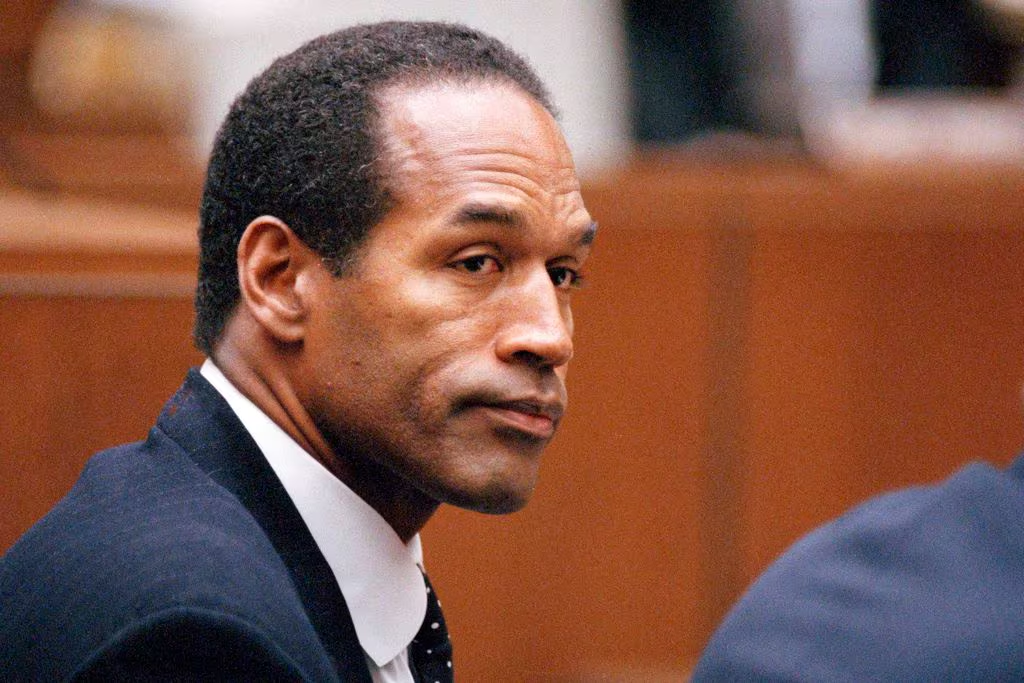
(Image via si.com)
Staff Writer: Gwen Pichette
Email: gpichette@umassd.edu
O.J. Simpson, the former NFL superstar and actor who was infamously acquitted in a trial on a double-murder charge, has just died.
Simpson was 76 years old.
According to his family, he died after a year-long battle with prostate cancer, passing away in his home in Las Vegas on Wednesday, April 10th.
This upcoming June would be the 30th anniversary of the double slaying of his ex-wife Nicole Brown Simpson and her friend Ronald Goodman.
Both were found brutally murdered outside of her Los Angeles condo on June 12th, 1994.
Before the double murder, he had been facing domestic abuse charges from his ex-wife, making him the prime suspect.
Suspicions worsened for him when he attempted to flee the charges in a car-speed chase launched by police—a spectacle that was televised to 95 million people.
In a shocking decision that rocked the watching world, he was never legally found guilty of the deaths. However, “three years after his criminal trial he was found liable in a civil suit brought by the victim’s families” of wrongful death. He was ultimately ordered to pay a whopping “$33.5 million in damages.”
Simpson certainly did not improve his name as a good citizen in the years following the trial.
In 2008, he served nearly nine years on felony charges of kidnapping, robbery, and various other counts in a notorious theft scheme over sports memorabilia. He was released in 2017.
Two years before that, back in 2006, Simpson released a book entitled If I Did It, claiming that he did not commit the murders he was accused of but explaining in meticulous detail how he would hypothetically carry out the gruesome murders “if ” he were to do it.
One video recently resurfaced from 1998 of O.J. screaming and then pretending to stab an interviewer with a banana. This reenactment was eerily reminiscent of the double murder, where both victims were stabbed to death with a knife.
Needless to say, there has been a consensus among the public that O.J. Simpson was a murderer walking free.
Despite such beliefs, O.J. Simpson’s family carefully avoided any mention of the murder trial when sharing the news about his death and officially released the following statement to X:
“On April 10th, our father, Orenthal James Simpson, succumbed to his battle with cancer. He was surrounded by his children and grandchildren. During this time of transition, his family asks that you please respect their wishes for privacy and grace.”
Though considering how high-profile the murder trial was, there has been anything but privacy and grace following his death. Instead, many have been thinking back on the notorious case, mainly of the lingering questions left unanswered.
For one, it was quickly revealed that before his death, Simpon forced his children to sign NDAs or non-disclosure agreements.
NDAs are formal agreements that vow to protect sensitive information—meaning that the signer is legally bound to keep quiet.
While some claim the NDAs were for privacy reasons during the time of his death, others still cannot help but question what else the children were not permitted to share—mainly information about the 1994 murder.
But O.J. Simpson’s long-time attorney, Malcolm LaVergne, who had intimate details of his last moments, was quick to shoot down questions about a potential deathbed confession by Simpson.
He instead took a more empathetic approach to the media when talking about Simpson’s surviving family:
“At the end of the day, these children just lost a father. And they have the added burden that he is one of the most famous people on the planet, and who is polarizing and who is surrounded by controversy.”
Ultimately, the 1994 case runs cold, and with O.J. Simpson’s death, it may forever remain that way.